Ember Ortiz Blog #4-Analyzing Lauren’s Hyper-Empathy as a Powerful Stimulus for Critical Thinking

          In Octavia Butler’s novel Parable of The Sower, Lauren lives in a gated community with her family, but when her home is destroyed and her family is killed, she sets out on a tumultuous path to find safety and a better life. With her belief, Earthseed, and a sense of purpose, she learns to rely on her strength and resilience to survive in a world that is hostile and dystopian. Lauren has hyperempathy, a rare condition that allows her to feel the emotions and physical sensations of others, making her vulnerable in this post-apocalyptic society where suffering is inevitable. The purpose of my analysis of Lauren’s hyper-empathy is to delve into the concept of empathy as a means to challenge conventional notions of empathy and provoke critical thinking about its implications.

          Hyper-empathy makes Lauren highly attuned to the feelings of those around her, and she demonstrates this ability multiple times throughout the story, highlighting its advantages. One example is when she gets intimate with Bankhole. In chapter 21, Lauren and Bankhole look out at the calm and peaceful scenery of a lake. Consequently, the couple gets a blanket and searches for an isolated area to have sex, with Lauren writing that “it felt natural and easy to lie down with him, and explore the smooth, hard, broad feel of his body” (Butler 266). Lauren finds comfort in knowing that someone appreciates her body without any negative emotions. Her hyper-empathy allows her to feel pleasure and understand human emotions deeply, forming strong connections with others based on shared emotional experiences. This unique ability enables her to empathize with both the pain and joy of others, bridging the gap between herself and those around her. Hyper-empathy plays a significant role in Lauren’s personal growth and self-awareness. Through her condition, she can form deep connections with others, experience intense sensations, and develop increased compassion and empathy. These aspects contribute to her overall development as an individual, allowing her to navigate through life with a greater sense of purpose and authenticity.

          However, despite its potential benefits, Lauren’s hyper-empathy presents numerous challenges and drawbacks that significantly impact her life and the narrative of the novel, including emotional burden, vulnerability, and isolation. Lauren’s hyper-empathy can be overwhelming and emotionally draining for her because she feels the pain and emotions of others as if they were her own. This constant influx of intense emotions can be exhausting and make it difficult for her to establish boundaries and maintain her emotional well-being. One example is when Lauren is helping Emery, who is fighting a bald man who grabbed Tori. Lauren kills the man by shooting him, later stating “I knew at once that Iʼd hit him. He didnʼt fall, but I felt his pain, and I wasnʼt good for anything else for a while. Then he toppled, and I collapsed with him” (Butler 296). Later, Bankhole tells Lauren that she is bleeding and a surprised Lauren admits she was not aware of this. Lauren’s hyperempathy makes it almost impossible for her to distinguish between her injuries and those of other people. This condition not only blurs the boundaries between her experiences and those of others but also endangers her by making it challenging to prioritize her safety and well-being. The constant state of vulnerability and the tendency to put others before herself further expose her to danger in the post-apocalyptic world she navigates.

          Moreover, Butler questions the comprehensiveness of the advantages of empathy, featuring its potential for weakness and emotional fatigue, especially in societies set apart by cruelty and scarcity. She explains that empathy can turn into an extravagance that people can’t bear without endangering themselves. Lauren’s empathy influences her capacity to draw in with others’ misery. In a post-apocalyptic society, where traumas and violence linger, Lauren becomes desensitized to others’ misery, making her relationships disintegrate and her ability to connect with others to vacillate. Through Lauren, Butler prompts readers to think about the restrictions and outcomes of empathy in a society that needs collective responsibility, encouraging them to address whether empathy alone can achieve significant change. Butler’s depiction of empathy features intricacy as a quality that can both empower and restrict people. By introducing empathy as nuanced and multifaceted, Butler prompts readers to challenge and evaluate their empathetic practices and the possible results of their activities fundamentally. But how can we cultivate a more empathetic society that takes into account the complexities of individual experiences and social structures?
Ember Ortiz’s Blog #2-Exploring the Multifaceted Implications of Haraway’s ‘Making Kin’ in Ethics, Politics, and Environmental Activism

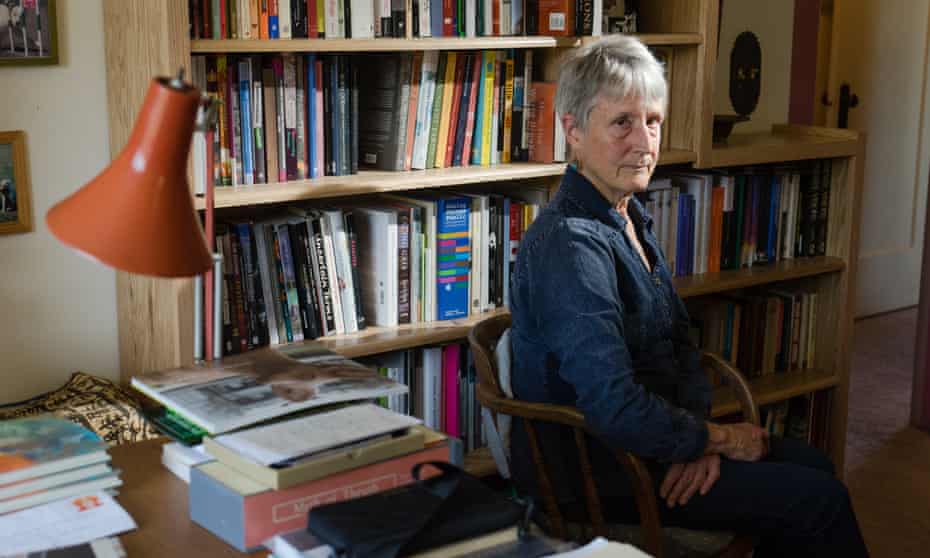
        Feminist cyborg scholar Donna Haraway: ‘The disorder of our era isn’t ...

          In her article titled “Anthropocene, Capitalocene, Plantationocene, Chthulucene: Making Kin,” Donna Haraway delves into the profound implications of both human and non-human activities on our planet. Haraway proposes a paradigm shift in our understanding of our relationship with the environment, advocating for a departure from the narrow focus on human impact in the Anthropocene era. Instead, she advocates for embracing the Chthulucene, which acknowledges the interconnectedness and interdependence of all forms of life on Earth. Haraway proposes a paradigmatic shift in our understanding of reproduction and family dynamics, urging us to move beyond the traditional emphasis on biological procreation and instead focus on cultivating meaningful bonds with non-human entities. By stating that humans should “make kin, not babies,” she contends that we can foster novel forms of kinship that prioritize interconnectedness and mutuality over hierarchical structures. This perspective not only challenges the anthropocentric view of human exceptionalism but also highlights the imperative of adopting more sustainable and equitable practices to ensure the well-being of all beings on the planet. But, what are the implications of Haraway’s call for “making kin” in terms of ethics, politics, and environmental activism? 

          Haraway’s proposition of “making kin” carries extreme ethical implications. She contends that it is important to acknowledge the autonomy and worth of non-human entities, and actively strive towards establishing sustainable and just modes of existence. This necessitates assuming accountability for our environmental impact, recognizing that our actions reverberate through future generations and the entire planet. Haraway writes “If there is to be multispecies ecojustice, which can also embrace diverse human people, it is high time that feminists exercise leadership in imagination, theory, and action to unravel the ties of both genealogy and kin, and kin and species” (161). The concept of ‘multispecies ecojustice’ encompasses an environmental justice approach that acknowledges the rights and welfare of all species, extending beyond the human realm. It underscores the imperative for fair treatment and inclusion of non-human entities in environmental decision-making procedures. By challenging the conventional anthropocentric perspective that places human interests above those of other species, this notion advocates for a more inclusive and holistic approach to environmental justice. Haraway asserts that feminists should assume a central role in promoting the concept of multispecies ecojustice. This argument posits that feminists possess the essential qualities, such as imagination, theoretical comprehension, and practical engagement, to navigate the intricate dynamics between genealogy (ancestry) and kinship (family ties) within and across different species. By unraveling these connections, feminists can contribute to a more comprehensive and inclusive understanding of justice that transcends anthropocentric perspectives, potentially targeting and challenging the notion of human exceptionalism.

          Haraway’s proposition to establish kinship also comes with political implications as it disrupts conventional understandings of familial ties, power structures, and modes of governance. By challenging traditional notions, her call prompts a reevaluation of existing social and political frameworks, paving the way for more inclusive and equitable systems. Traditional political systems have historically operated on the premise of hierarchies and dominance, where humans have exerted control over non-human entities solely for their own advantage. However, Haraway challenges this anthropocentric worldview by acknowledging the agency and interconnectedness of all beings. She advocates for a political framework that is rooted in mutual respect and reciprocity, rather than exploitation and subjugation. This necessitates a redistribution of power and decision-making processes to encompass non-human actors in political deliberations, recognizing their inherent value and contributions. Haraway explains that “‘Make Kin’ and ‘Not Babies’ are both hard; they both demand our best emotional, intellectual, artistic, and political creativity, individually and collectively, across ideological and regional differences, among other differences”(161). This is why Haraway advocates for the implementation of novel governance structures capable of accommodating the intricacies of the Chthulucene, a term she employs to depict the present era characterized by intertwined relationships among multiple species. Conventional political frameworks may lack the necessary tools to effectively address the complexities arising from these interconnections. As an alternative, Haraway proposes exploring models such as multispecies democracy or companion species governance, which acknowledge the agency and interests of non-human entities. Achieving this goal necessitates a fundamental reimagining of political institutions and practices, fostering inclusivity, participation, and responsiveness to the diverse needs of all forms of life.

          In conclusion, Haraway’s proposition to “make kin” carries profound implications for ethics, politics, and environmental activism. By prioritizing interconnectedness and mutuality over hierarchical structures, we have the potential to cultivate innovative forms of kinship that challenge the prevailing anthropocentric perspective of human exceptionalism. This perspective underscores the urgency of embracing sustainable and equitable practices to safeguard the well-being of all beings on our planet. Moreover, it compels us to acknowledge our environmental impact and assume responsibility for our actions, recognizing that their repercussions extend to future generations and the entire biosphere. This serves as an invitation to reconceptualize our connection with the natural world and foster a future that is characterized by inclusivity and justice for ALL living beings.


Ember Ortiz BLOG #1


          The excerpt from Nixon’s Death in the Anthropocene explores the concept of how slow violence, which refers to a type of violence that occurs gradually over time, is often overlooked or ignored due to its lack of immediate spectacle. The excerpt also explores the environmentalism of the poor and the ways in which imaginative writing and rhetorical strategies can help raise awareness about environmental injustices. Nixon weirdly employs a slow and gradual writing style to mirror the gradual and often unnoticed nature of slow violence itself. This in return can cause the readers to have a sense of unease and discomfort; the deliberate pacing and careful attention to detail force readers to slow down and pay closer attention to the narrative. Interestingly, the deliberate writing style also serves to amplify the impact of slow violence itself, allowing readers to experience the slow unfolding of events in a way that mirrors the insidious nature of slow violence.  Not only is Nixon embodying what he’s rhetorically conveying, but what we have here is an indirect psychological effect on the readers, where they are the subjects to a proposition made by the same author AND experience the effects of the enduring issue being mentioned.

          Nixon explains that novels and other forms of imaginative writing can be an important influence in raising awareness about climate change and environmental issues. According to him, such writing can provide “scientific and imaginative testimony”(2367). to ecological injustices in a way that captures public attention, stirs emotion, and inspires concrete political action. By telling stories and creating images that are “capable of shining a spotlight on acts of violence that are not easily reduced to media spectacles”(2353), activist writers can help draw public and political attention to the problem of slow violence.  Nixon is doing what he is proposing people to do. Nixon raises the question:  “How can environmental activists and storytellers work to counter the potent political, corporate, and even scientific forces invested in immediate self-interest, procrastination, and dissembling?”(2362).  He discusses the representation of climate change in novels and how it can be challenging to convert the slow-moving and long-term effects of environmental disasters into compelling narratives that can rouse public sentiment and warrant political intervention. He mentions Michael Crichton‘s 2004 environmental conspiracy novel, “State of Fear,” which argued that more data gathering on climate change was needed before any policy decisions could be made. He also notes that Rachel Carson faced a similar dilemma almost half a century ago as she sought to dramatize the environmental impact of pesticides in her book “Silent Spring.” Novels have a special role to play in helping us think more richly, more clearly, and more deeply about climate change due to their capacity for storytelling and empathy-building. Novels have the power to weave together these different aspects into compelling narratives that resonate with readers on an emotional level. 

          Now, the way Nixon corroborates this claim is unusually interesting. Nixon’s use of a slow and gradual writing style can be seen as a deliberate technique to reflect the characteristics of slow violence. Slow violence unfolds slowly, yet it has a significant impact on humans. That is exactly what Nixon is doing. By employing a similar writing style, Nixon creatively and strategically aims to create a parallel experience for the readers. The gradual unfolding of his narrative mirrors the gradual unfolding of slow violence itself. This technique allows readers to immerse themselves in the subject matter and gain a deeper understanding of its complexities. The use of a slow and gradual writing style also has an indirect psychological effect on the readers. As they progress through Nixon’s text, they are subjected to a proposition made by the same author. The proposition here refers to the argument or message that Nixon is conveying about slow violence. By immersing readers in a slow and gradual narrative, Nixon invites them to contemplate and internalize the issue at hand. Furthermore, readers not only encounter Nixon’s proposition but also experience the effects of the enduring issue being discussed. The gradual and chronological nature of Nixon’s writing allows readers to witness the unfolding consequences of slow violence firsthand. This immersive experience can evoke emotional responses, empathy, and a sense of urgency in addressing these issues.

          By “practicing what he preaches” and strategically unfolding his events gradually to mimic the effects of slow violence, Nixon’s excerpt can be seen as a form of literary activism. By embodying the principles he advocates for within his own writing, he builds credibility to his arguments and demonstrates the transformative potential of literature, indirectly making the readers feel the effects of slow violence and helping them understand how “novels have a special role to play in helping us think more richly, more clearly, and more deeply about climate change.”
